

What Is Al Hamichya?
When to Say It, What Foods Require It & Why Every Jewish Home Should Have It Nearby
What Is Al Hamichya?
For many Jewish families, Al Hamichya is one of the blessings recited most often - yet it's also one of the easiest to forget. Whether you're enjoying cake after Kiddush, crackers with tuna for lunch, or a pastry with your morning coffee, knowing when to recite Al Hamichya is an important part of daily Jewish life.
Unlike Birchas Hamazon, which is recited after eating bread, Al Hamichya is said after eating qualifying mezonos foods made from the five primary grains. Because these meals often happen throughout the day, many families choose to keep the blessing visible rather than searching for a bentcher or siddur each time.
In this guide, we'll explain what Al Hamichya is, when it is recited, which foods require it, and why beautifully displaying the blessing in your home has become increasingly popular.
What Does Al Hamichya Mean?
Al Hamichya (על המחיה) is a Bracha Achrona - a blessing recited after eating certain foods. The prayer expresses gratitude to Hashem for providing nourishment and asks that we continue to receive His blessings.
Although shorter than Birchas Hamazon, Al Hamichya carries deep meaning. It reminds us that every meal, even a quick snack, is an opportunity to recognize the gifts we receive every day.
For many families, reciting Al Hamichya becomes a meaningful daily habit that connects ordinary moments with gratitude and faith.
When Do You Say Al Hamichya?
Al Hamichya is generally recited after eating a sufficient amount of qualifying mezonos foods made from one of the five grains.
Common examples include:
-
Cake
-
Cookies
-
Muffins
-
Brownies
-
Pastries
-
Danish
-
Rugelach
-
Crackers
-
Pretzels
-
Certain cereals
-
Kugel
-
Pasta (when applicable according to halachic guidelines)
-
Pizza (depending on the circumstances and one's halachic practice)
As with all matters of halacha, specific situations can vary. If you're unsure whether Al Hamichya applies, consult your rabbi or follow your family's established custom.
Al Hamichya vs. Birchas Hamazon
Many people wonder which blessing should be recited after different foods.
| Food | Blessing Afterwards |
|---|---|
| Bread | Birchas Hamazon |
| Challah | Birchas Hamazon |
| Cake | Al Hamichya |
| Cookies | Al Hamichya |
| Muffins | Al Hamichya |
| Crackers | Al Hamichya |
| Pastries | Al Hamichya |
| Brownies | Al Hamichya |
Because both blessings are recited after eating, it's common to confuse them - especially when serving multiple foods at one meal. Having the appropriate blessing displayed nearby makes it much easier for both family members and guests.
Why More Families Are Displaying Al Hamichya in Their Homes
Years ago, most homes relied on bentchers or siddurim tucked away in drawers or bookshelves. Today, many families prefer to display frequently used blessings where they're needed most.
A beautifully designed Al Hamichya plaque offers several practical benefits:
-
The blessing is always within reach.
-
Children become familiar with the text through everyday exposure.
-
Guests can easily find the blessing after a meal.
-
It eliminates searching for a bentcher after every snack.
-
It serves as both functional Judaica and elegant home décor.
Rather than feeling like an item that's only taken out occasionally, an Al Hamichya plaque becomes part of everyday Jewish living.
View our Al Hamichya Collection
Wall Plaque or Tabletop Plaque?
The best choice depends on your space and how you plan to use it.
Wall Plaques
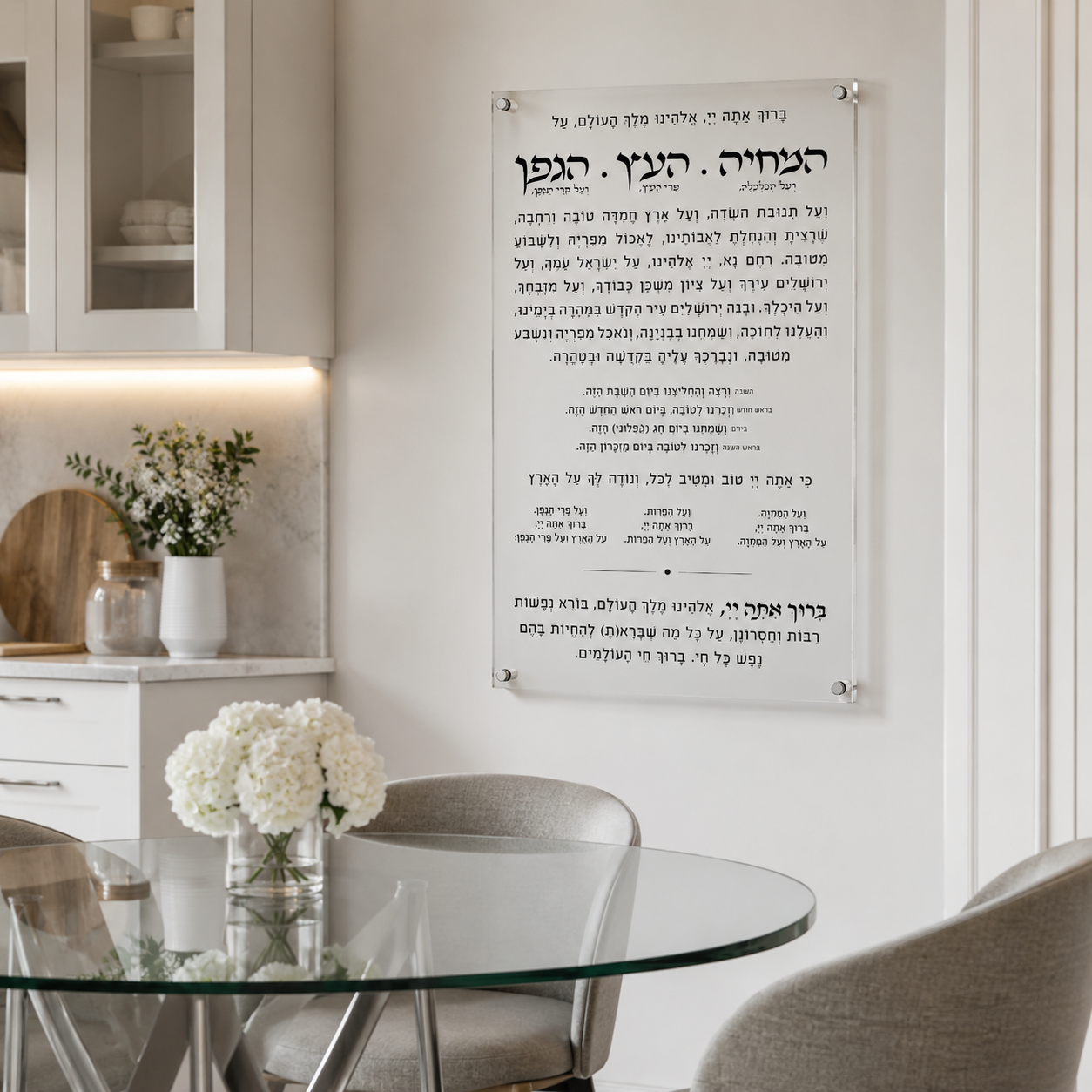
A wall-mounted Al Hamichya sign is ideal for:
-
Dining rooms
-
Breakfast nooks
-
Kitchens
-
Eat-in kitchens
-
Family gathering spaces
It keeps the blessing permanently displayed while adding a refined decorative touch to the room.
Tabletop Plaques
A freestanding plaque offers flexibility and convenience.
It's perfect for:
-
Kitchen islands
-
Dining tables
-
Buffet tables
-
Offices
-
Vacation homes
Many families enjoy moving it wherever meals are served.
Should You Choose Al Hamichya Alone or a Combined Plaque?
Some families prefer a plaque dedicated solely to Al Hamichya.
Others choose a combined plaque featuring both Birchas Hamazon and Al Hamichya, allowing them to use a single elegant display for multiple occasions.
A combined plaque is especially useful for families who regularly serve both bread meals and mezonos foods.
View Combined Birchas Hamazon & Al Hamichya Plaques
A Beautiful Addition to the Modern Jewish Home
Today's Judaica isn't just about functionality - it's also about creating a home filled with beauty, tradition, and intentional design.
Crystal-clear lucite has become a popular choice because it complements virtually every decorating style while allowing the blessing itself to remain the focal point.
Whether your home is traditional, transitional, or contemporary, an elegantly designed Al Hamichya plaque blends seamlessly into your décor while serving an important daily purpose.
Frequently Asked Questions
What is Al Hamichya?
Al Hamichya is the blessing recited after eating qualifying mezonos foods made from the five primary grains.
When do you say Al Hamichya?
It is generally recited after eating a sufficient amount of qualifying mezonos foods. For specific halachic guidance, consult your rabbi.
Is Al Hamichya the same as Birchas Hamazon?
No. Birchas Hamazon is recited after eating bread, while Al Hamichya is recited after qualifying mezonos foods.
Where should I display an Al Hamichya plaque?
Popular locations include dining rooms, kitchens, breakfast nooks, and any place where family members regularly enjoy meals or snacks.
Is an Al Hamichya plaque a good gift?
Absolutely. It makes a thoughtful gift for weddings, housewarmings, newlyweds, anniversaries, and anyone establishing or refreshing a Jewish home.
Why choose a lucite Al Hamichya plaque?
Lucite offers a clean, modern appearance that's durable, easy to maintain, and complements virtually any décor style while allowing the blessing to remain easy to read.
Final Thoughts
Al Hamichya is a blessing many people recite several times each week. Keeping it beautifully displayed transforms it from something you need to search for into a natural part of everyday Jewish life.
Whether you choose a wall-mounted plaque for your dining room or a tabletop version for your kitchen, having the blessing readily accessible encourages gratitude, makes it easier for guests and family members to participate, and adds a meaningful decorative element to your home.
If you're looking for a beautiful way to combine timeless Jewish tradition with modern design, an elegant Al Hamichya plaque is a practical addition you'll appreciate every day.