

Standing to Daven and Learn: Why a Shtender Helps and What the Halacha Sources Say
Standing while davening and learning isn't a style choice. The practice runs through poskim and mussar sefarim, and you see it every day in any kollel or beis medrash. A shtender is the piece of furniture that keeps the practice realistic at home, in a dorm, or in a shul. Without one, your back complains within a few minutes and you slide into a chair anyway.
This post pulls together what the halacha sources point toward and what to actually buy if you're trying to make standing learning a daily habit instead of a Shabbos-morning thing.
Standing for Shemoneh Esrei is the anchor case
Every adult mispallel knows that Shemoneh Esrei is said standing. The Shulchan Aruch in hilchos tefilah (Orach Chaim siman 95 and around it) lays out the basics: feet together, with the body slightly bent and the eyes pointed downward. The prayer's name itself, amidah, comes from the standing posture. So if there's a single halachic anchor for standing during davening, that's the one most poskim point to.
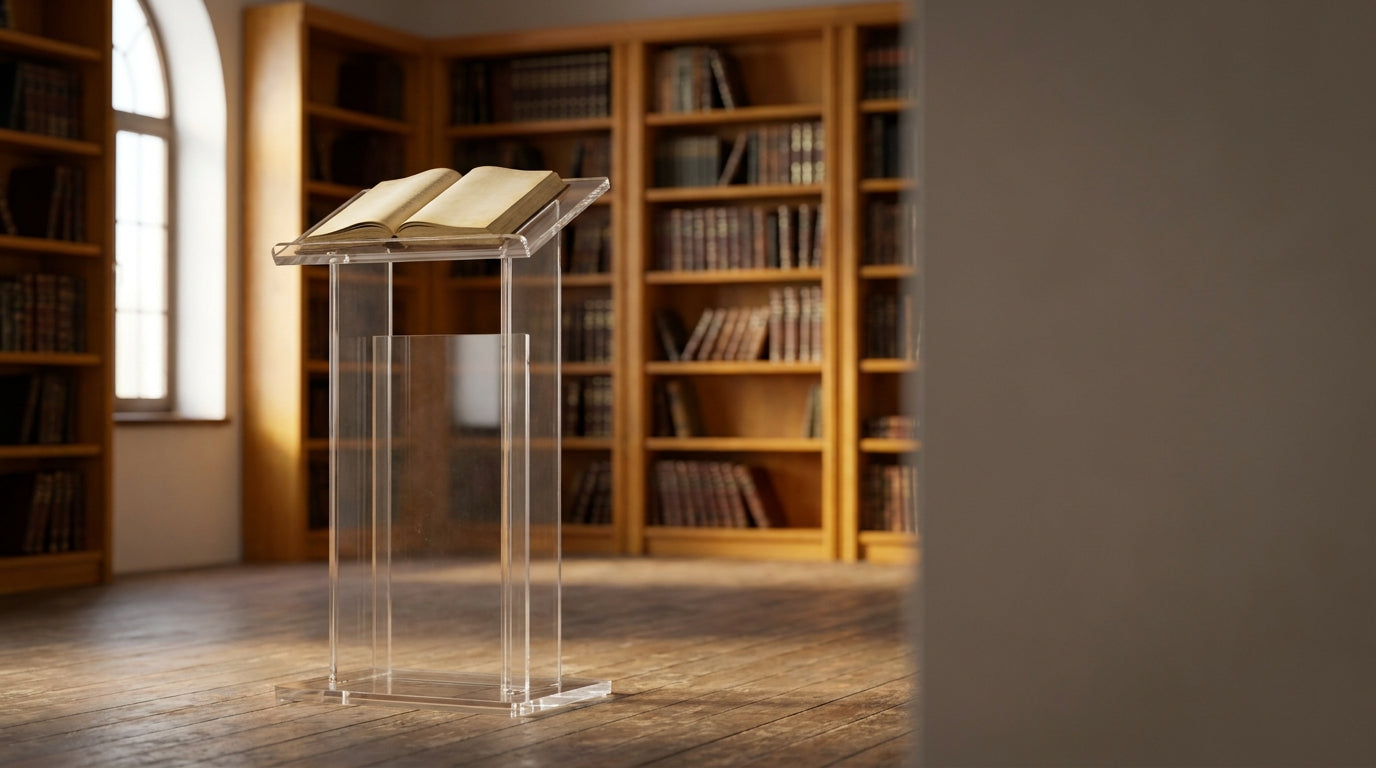
A floor lucite shtender lets you keep the posture without holding the siddur up the whole time. The angle's right for the page, your hands stay free during the moments you need them open, and once Shemoneh Esrei ends the shtender just gets out of your way.
Standing for parts of learning has its own basis
Learning isn't governed by the same chiyuv, but the practice of standing for limud Torah, especially for serious learning of a sugya or for repeating shiur, has long roots. Mussar sefarim describe gedolim who learned standing for hours. The Steipler famously stood at his shtender for the bulk of his learning day. The point isn't that you have to stand for every sugya, the point is that standing changes the seriousness of the engagement.
Several poskim discuss the kavod for the sefer involved when you learn standing, especially for limud baal peh or chazarah. The exact sources vary by community minhag and by the type of learning, so check with a rav for your specific situation.
What the practice actually requires from the furniture
Standing learning fails fast for two reasons that both come down to furniture. The sefer ends up at the wrong height, or the surface won't carry a heavy Gemara honestly.
On the height side, a page sitting below your sternum forces a hunch, and an hour in your lower back's done arguing with you. Move that same page up to chin level and the issue flips to your neck. What you're aiming for sits right around the bottom of your sternum, which on most adults works out to a shtender top somewhere between forty and forty-six inches off the floor.
On the surface side, a wobbly stand starts leaning the second a heavy Gemara lands on it, and you spend the rest of the seder adjusting instead of learning. The full-length lucite shtender was designed around exactly that problem. It's stable at standing height even with a Schottenstein open on it, the top is sized for a standard Talmud volume without overhang, and the slope means the page is already where your eyes want it.
When tabletop wins over floor
Not every learner has the floor space for a full-height shtender, and not every type of learning needs one. If you're sitting for most of your seder, or you learn mostly at a dining table or desk, a tabletop lucite shtender lifts the sefer the right amount without taking over the room. The Deluxe Tabletop Shtender is what most home daf yomi learners end up with for that reason. Standing is reserved for chazarah or longer sessions; tabletop covers the rest.
Why lucite shows up so often in serious learning corners
Three reasons. The first is humidity. A wood shtender in a basement or near a heater shifts shape over a year, and a wobbly shtender pulls focus from learning. The second is weight. A bochur in a dorm or a kollel yungerman who carries the shtender to a chaburah needs something liftable. The third is yellowing. A quality lucite shtender stays clear long enough that the same shtender goes from chosson days through years of kollel without looking tired. We covered the full material question in our acrylic vs wooden shtender post.
Practical setup that actually works
A few tips from learners who've made this stick. Pick the height for your tallest Gemara, not your average sefer. A flat siddur on a too-tall shtender is fine; a Gemara on a too-short one is a nightmare. Put the shtender against a wall if you can, so you're not constantly nudging it. Keep a small chair behind you. Standing learning usually means standing for the hard parts and sitting for review, so don't try to make it standing-only. For Shemoneh Esrei, position the shtender so you're facing east. The shtender is a tool for kavanah, not an obstacle to it.
What we'd recommend
For a dedicated standing-learning corner at home, the Full Length Lucite Shtender is the build for it. For a learner who splits time between sitting and standing, the Deluxe Tabletop Shtender handles 80% of the day comfortably. For a small dorm or a tight desk, the Compact Tabletop Shtender is the same build at a smaller footprint.
Browse the full Lucite Shtenders collection for the lineup, and the best shtenders roundup if you're still narrowing it down.
FAQ
Do I have to stand for all of davening?
No. The chiyuv to stand is for Shemoneh Esrei. The rest of davening has different practices depending on community minhag. Many mispallelim sit for parts of pesukei dezimra and stand for kaddish, kedusha, and shemoneh esrei. Ask your rav for your specific minhag.
Is there a halachic preference for a specific shtender material?
Not in the sources we know of. The halacha is about the posture and kavod for the sefer, not about whether the lectern is wood or lucite. Material is a practical decision, not a halachic one.
Can I learn or daven sitting if standing isn't realistic for me?
Yes, especially for those with health limitations. Halacha accommodates real situations. Speak with a rav who knows your circumstances.
How tall should a standing shtender be?
For most adults, the top of the shtender should hit between forty and forty-six inches off the floor, putting the page at the bottom of your sternum. The Full Length Lucite Shtender is sized for that range.