
Acrylic Shtender vs Wooden Shtender: Why Lucite Lasts Longer in a Beis Medrash
The shtender question gets easier once you settle the material question. Most buyers we hear from at ZStander have already decided they want one, they just can't tell whether to go acrylic or wood. So here's the honest comparison, with the trade-offs you actually feel after a year of daily use.
The short answer
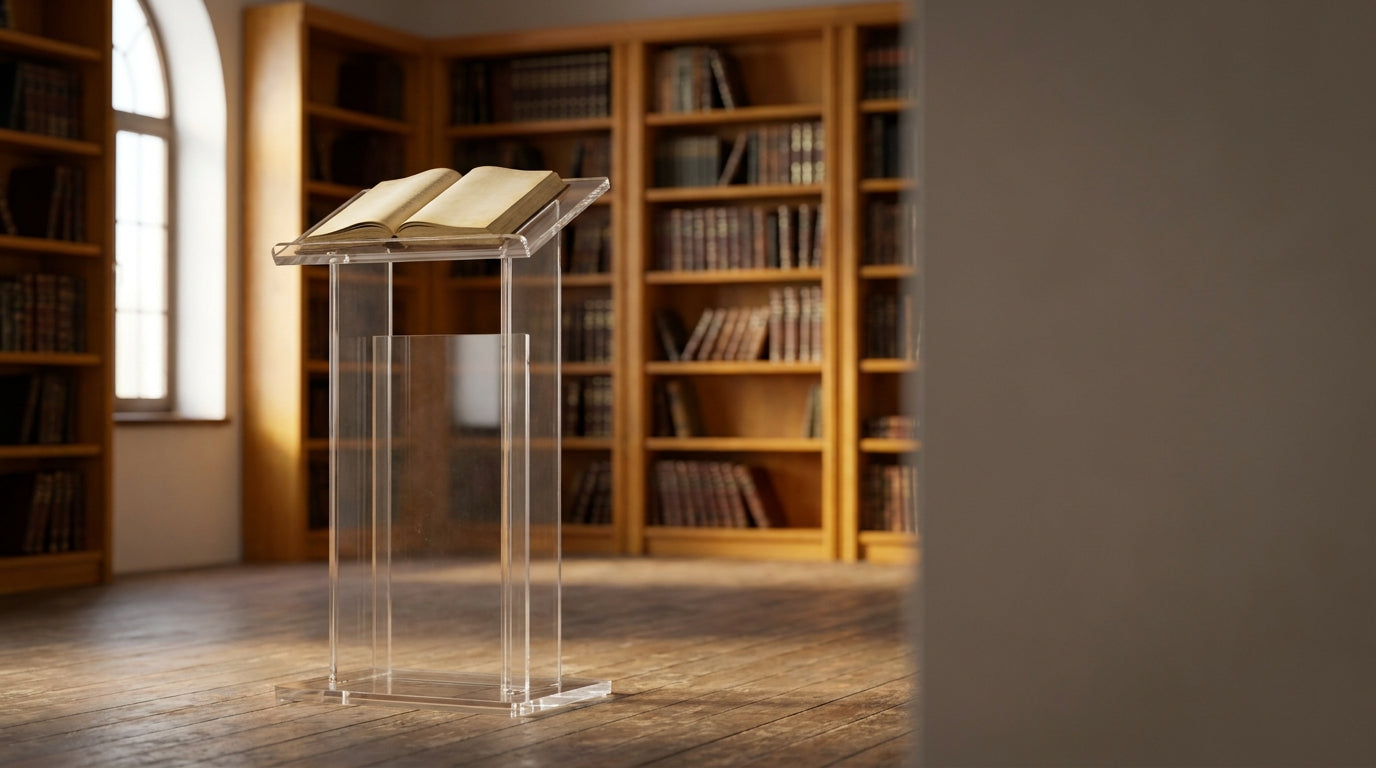
For daily learning at home, in a kollel, or for a yeshiva bochur who'll be sliding a Gemara around it for years, a lucite tabletop shtender wins on weight, yellowing resistance, and repairability. Wood still has a place, mostly when you want a heavy traditional piece for a shul or a study with an aesthetic that calls for warm grain. Both work. They don't last the same.
Acrylic and lucite are the same thing (with one catch)
People say "acrylic shtender" and "lucite shtender" interchangeably. Lucite is a brand name for a type of acrylic, the way Kleenex is for tissue. The catch is that not all acrylic is built the same. Cheap acrylic shtenders on Amazon are usually extruded sheet, which is thinner and tends to yellow under sunlight. The thicker, polished lucite used across the ZStander shtender line is built for that day-in, day-out reality, with optically clear sheets and finished edges. If you're comparing prices and one acrylic shtender is a lot cheaper than another, that's usually the reason.
Comparison at a glance
| Criterion | Acrylic / Lucite Shtender | Wooden Shtender |
|---|---|---|
| Weight (tabletop) | Light, easy to carry between rooms | Heavier, usually stays in one spot |
| Yellowing risk | Quality lucite stays clear for decades; cheap acrylic yellows | Doesn't yellow, but darkens or sun-bleaches unevenly |
| Maintenance | Soft cloth, acrylic-safe cleaner | Wax or sealing every year or two |
| Repairability | Surface scratches buff out with plastic polish | Gouges and dents usually need refinishing |
| Typical price | $90 to $180 | $180 to $300 |
| Best fit | Daily learners, bochurim, modern homes | Shuls, traditional studies, heirloom pieces |
Daily-use durability is where lucite quietly pulls ahead
A shtender takes more abuse than people expect. The Gemara gets dropped on it. Sefer covers slide back and forth across the lip a thousand times over a few years. In a humid summer, wood swells; in a dry winter, it shrinks and can split at the joints. Cast lucite doesn't care about any of that. Humidity doesn't bother it, the material has no grain to crack along, and the color stays the same whether the shtender lives near a radiator or a window.
If you're buying for a bochur in mesivta or a kollel yungerman, this matters more than the photo on the product page. That shtender is going to live next to a chair for years and get carried around the house for chaburahs. It'll probably survive a move or two as well. Lucite handles all of that without complaint.
Yellowing: the hidden long-term cost
Cheap acrylic yellows. Higher-grade lucite stays clear, or at least clear enough that nobody notices the difference. This isn't a spec that shows up on the product page; it shows up six years later when you sit your shtender next to a friend's and one of them looks tired. Wood goes the other way. It doesn't yellow, but sun bleaches it in patches, especially against a window. Nothing in this category ages perfectly. Lucite just ages quieter.
Weight and portability
A tabletop lucite shtender like the Basic ZStander is light enough that one hand carries it. That sounds like a small thing, but it isn't. It means the shtender actually moves with the learner. Home office to kitchen for a siyum. Dining room to porch on a nice afternoon. A heavy wooden tabletop sets up once and stays put, which is fine for a shul and less great for a home where the learning spot drifts around.
For floor-standing shtenders the calculus shifts. A full-length lucite shtender is still lighter than wood, but at floor height the heft of wood can feel reassuring. We still go lucite for the same yellowing and humidity reasons, just acknowledge that the weight gap matters less here.
Repair reality
Lucite scratches. Anyone telling you otherwise is selling. The fix though is about ten minutes with plastic polish, and the surface looks new again. Deep gouges in lucite are rare because the cast sheet is thick enough to take a hit. Wood is the opposite story. It dents from a dropped sefer or a heavy Gemara closing wrong, and the repair usually means refinishing the whole top, not buffing one spot. So lucite scratches more visibly, but recovers more easily.
When a wooden shtender is the right call
Wood wins when the shtender is the centerpiece of the room. A custom oak or walnut shtender in a study with built-in bookshelves looks right in a way lucite doesn't. Heirloom pieces matter here too: a gift where the recipient will keep the shtender in one spot for the next thirty years, or a traditional shul with a wood-paneled bimah, makes wood the obvious fit. The trade-offs are real though. You'll usually pay $200 to $300+, you can't move it easily, and the wood needs upkeep.
We don't sell wood. We sell lucite. So if you've decided wood is the right call for your situation, that's a fair decision, just go in knowing what you'll spend on upkeep.
What we recommend
For most buyers, we point to the Deluxe ZStander Lucite Tabletop Shtender. It's our top-selling shtender for a reason: thick lucite, polished edges, sized for a Gemara without being unwieldy. If you want floor height, the Full Length Lucite Shtender is the same material story, scaled up. For a smaller bochur or a tight desk, the Compact Tabletop Shtender is the same build at a smaller footprint.
Browsing Lucite Shtenders gives you the full lineup. If you're still weighing options, the best shtenders roundup covers our full picks, and the shtender price guide breaks down what you're actually paying for at each price point.
FAQ
Is acrylic the same as lucite for a shtender?
Lucite is a brand name for a type of acrylic. They're the same family, but the quality varies a lot. Higher-grade lucite is thicker, clearer, and more UV-stable than the thin acrylic sheet on cheap shtenders.
Will a lucite shtender yellow over time?
A quality lucite shtender won't yellow on any normal timeline. Cheaper acrylic yellows after a few years of sun exposure. The grade of the acrylic sheet is what determines this, not the brand on the label.
Is a wooden shtender heavier than a lucite one?
Yes, usually significantly. A solid hardwood tabletop shtender can weigh two to three times what an equivalent lucite one weighs. That's a benefit for a permanent shul setup and a downside for a learner who carries the shtender between rooms.
Which is better for a yeshiva bochur, lucite or wood?
Lucite, in most cases. It's lighter to move between dorm and beis medrash, it survives humidity and dry winters better, and a scratch buffs out instead of needing a refinish. Wood is fine if the bochur has a dedicated learning corner that won't move for years.