

Shtender Gifts for a Chasunah, Engagement, or Siyum: When and Why a Shtender Makes the Right Gift
A shtender is on a short list of simchah gifts that get used every day for the next decade. Most simchah gifts are decorative. A shtender is functional. The chosson stands at it for kvius itim. The mesayem stands at it for the next mesechta. Years later it's still in the corner of the room, and the engraving on the front still tells the story of why it's there.
If you're choosing a chasunah, engagement, or siyum gift and you want something that actually gets used, here's the full picture.
When a shtender is the right gift
Three situations where a shtender lands cleanly.
A chosson who learns. If the chosson has a daily seder, a kvius itim, or any consistent learning practice, a shtender given before the wedding is something he uses from day one of the marriage. It signals that the giver values his learning.
A siyum, especially a siyum mesechta or siyum hashas. A new shtender, with the date and the mesechta engraved, becomes a tangible marker of the achievement. Every time the mesayem stands at it for the next mesechta, the gift is doing its job.
An engagement, when the giver wants something more meaningful than a generic kli kodesh. A shtender given at the engagement, with both names engraved, is a present from before the chasunah that says "we expect this to be a learning home."
When a shtender is the wrong gift
Two situations where it's a mismatch.
A chosson who doesn't have a learning practice. Don't give the shtender as an aspirational nudge. He'll feel the implicit pressure, and the shtender will end up in a closet.
A simchah where you don't know the recipient well. A shtender is a personal piece of furniture, and getting the size or material wrong makes it a return. If you're a distant relative or a colleague, a Bar Mitzvah collection item, a Wedding collection piece, or a generic Gift collection Judaica gift is usually safer.
What to engrave for a chasunah gift
The standard engraving for a chosson's shtender has three lines.
Line one: the chosson's full Hebrew name.
Line two: the kallah's full Hebrew name (optional, but more couples are doing this).
Line three: the chasunah date in Hebrew or English.
Some families add a fourth line, "Lichvod ha-chosson v'ha-kallah," especially when the gift is from the kallah's side or from a rebbi. We covered the full engraving and dedication options in our personalized shtender post. The mistake to avoid: don't dictate the Hebrew text over the phone. Always email or message the exact Hebrew you want engraved, and we'll send a proof before anything is cut.
What to engrave for a siyum gift
For a siyum mesechta, a typical engraving reads:
Line one: "L'siyum mesechta [name]"
Line two: the mesayem's name
Line three: the date of the siyum
For a siyum hashas, swap "mesechta" for "Shas" on line one. For a daf yomi siyum, "siyum hashas (machzor X)" with the cycle number is the convention.
Which shtender for which simchah
Three matchups.
A chosson gift in most homes: Deluxe Tabletop Shtender with the engraving package. It fits on most desks and dining tables, and the chosson can use it from the first shabbos in the new apartment.
A chosson gift when the couple has a dedicated learning corner already planned, or for a more formal study room: Full Length Lucite Shtender. The full-height piece signals that this is for serious daily learning.
A siyum gift, where the mesayem is starting his next mesechta tomorrow: a Deluxe Tabletop Shtender with engraving. The same shtender carries him through the next mesechta and beyond. We have related thinking in our daf yomi shtender post.
Pairing a shtender with other simchah gifts
A shtender alone is a solid gift. Some givers prefer to pair it with something. A few combinations that work.
For a chasunah: shtender plus a Shas or Mishna Berura set. The chosson opens the wedding-day seforim on the wedding-day shtender. The pairing tells a story.
For a siyum: shtender plus the next mesechta's Schottenstein or Artscroll volume. The mesayem stands at the new shtender with the new sefer the next morning.
For an engagement: shtender plus a Tehillim or a Kuzari for the chosson. A more modest pairing, with the bigger gift saved for the wedding.
For a more general gift list, browse the Wedding collection or the Gift collection.
Timing the shtender gift
A few practical notes.
Order at least three weeks before the simchah if engraving is involved. Engraving adds about ten business days, and rush jobs sometimes mean compromises on the Hebrew typesetting that you'd rather not make.
Send the gift to the simchah, not to the recipient's home. If you ship to the home, the shtender is unboxed and seen before the simchah, which kills the moment. Most simchah halls accept boxed gifts at the entrance.
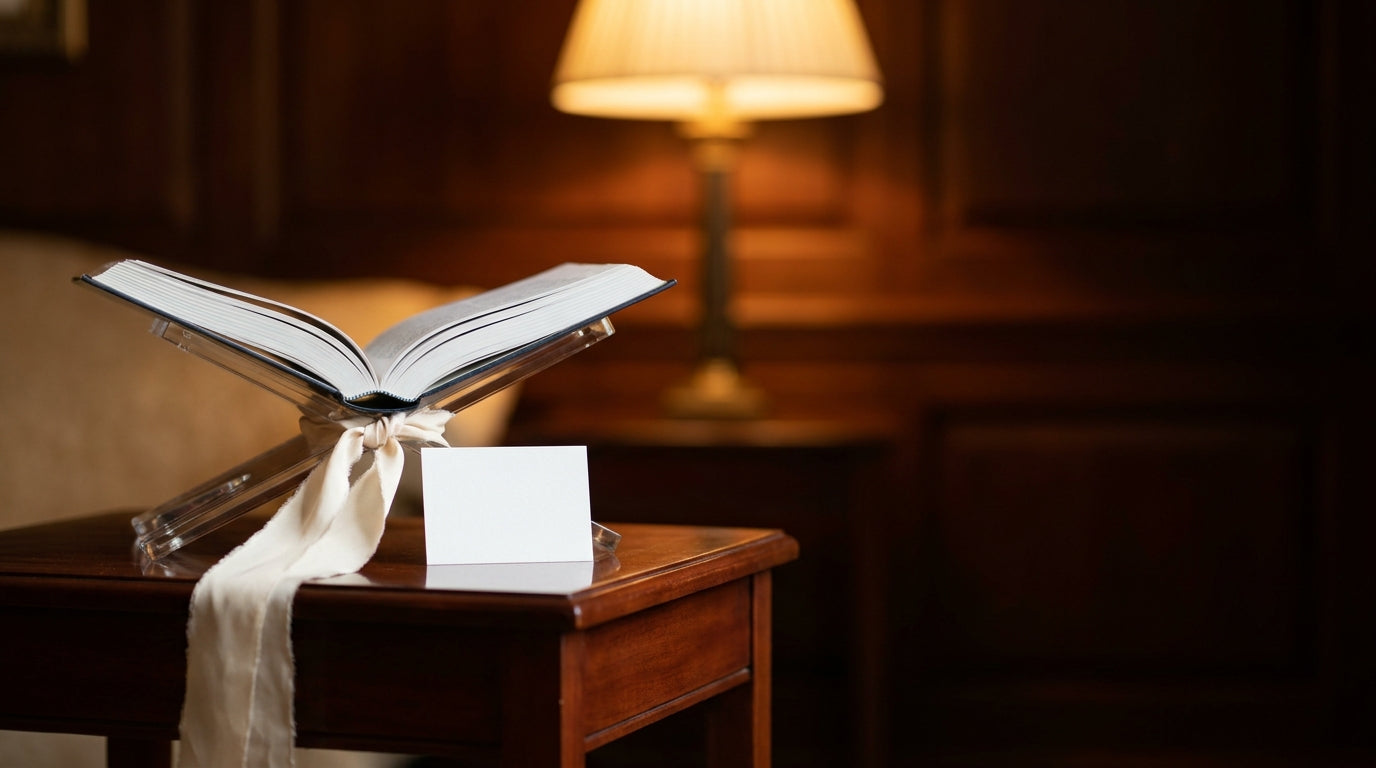
Consider a shtender card. A simple card with the engraving wording and a short brachah lets the chosson or mesayem read the dedication separately from the moment of opening the box.
What we recommend
For most chasunah and siyum gifts, the Deluxe ZStander Lucite Tabletop Shtender with engraving is the standard. For larger formal gifts, the Full Length Lucite Shtender. For a younger mesayem (a bar mitzvah-aged boy who completed his first mesechta), the Compact Tabletop Shtender sized to him.
Browse Lucite Shtenders for the full lineup. For pricing, see the shtender price guide. For the engraving details, the personalized shtender post.
FAQ
Is a shtender too personal a gift for a colleague's chasunah? For a colleague you don't know well, yes. A shtender is for someone whose learning practice you actually know. For a colleague, browse the Wedding collection for less personal options.
How long does a chasunah engraving take? About ten business days from the time we have the final approved Hebrew text. For a wedding date that's three weeks out, you're fine; under three weeks, message us first.
Can I get both names engraved for an engagement gift? Yes. A two- or three-line engraving with the chosson's and kallah's Hebrew names plus the date is a popular configuration.
Should I get the shtender wrapped at the wedding hall? Most simchah halls have a gift table. Send the shtender boxed in its original packaging, with the dedication card on top. The hall staff usually displays it at the gift table during the chasunah.